

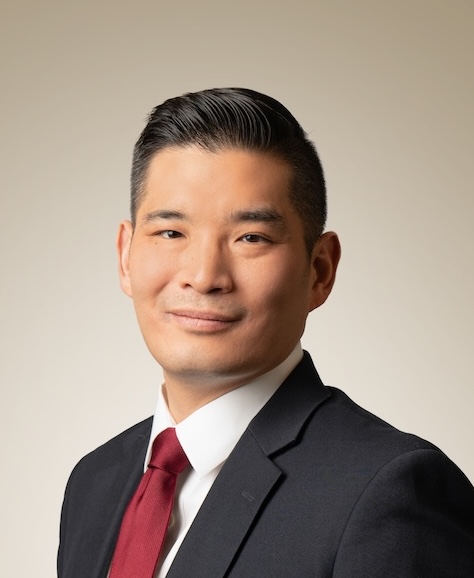
Texas Retina’s Rene Y. Choi, MD, PhD, was recently invited to present at the Excellence in Eye Care Symposium, the 2026 annual meeting of Cornea Associates of Texas.
Dr. Choi’s talk was titled “Macular Holes: Diagnosis, Surgery, and Co-Management. A Clinical Playbook for Optometrists and Anterior Segment Surgeons.” In it, he highlighted several risk factors for development of macular holes:
- Women face a significantly higher risk, with a 3.3 to 1 female-to-male ratio.
- Peak onset occurs predominantly in the 6th and 7th decades of life.
- There is an 11.7% bilaterality risk of patients developing an idiopathic macular hole in their fellow eye.
On diagnosing and treating macular holes, Dr. Choi shared four key insights:
- Referral timing is vision. Success rates for treating macular holes exceed 90% if caught early, and delays >6 months can significantly reduce functional outcomes.
- Optical coherence tomography (OCT) is the gold standard for diagnosis. Biomicroscopy (slit-lamp examination) misses early stages, so he recommends relying exclusively on cross-sectional SD-OCT (spectral domain OCT).
- A cataract is almost guaranteed. Nearly 100% of phakic patients (people who still have their natural eye lens) receiving gas tamponade during vitrectomy surgery for a macular hole will require cataract surgery within 1-2 years.
- Positioning is evolving. Strict 14-day face-down posturing after surgery is largely a thing of the past for most primary macular holes.
He also discussed innovations in surgical techniques, the visual recovery timeline and how to navigate refractive shifts after surgery. Dr. Choi concluded his presentation by emphasizing the importance of collaboration amongst eye providers to preserve patients’ vision.
About Dr. Rene Choi
Dr. Choi joined Texas Retina in 2020 and cares for patients in our Denton and Frisco offices. He is passionate about developing and refining advanced surgical techniques for complex retinal cases to improve patient outcomes. Click HERE to learn more about him.