

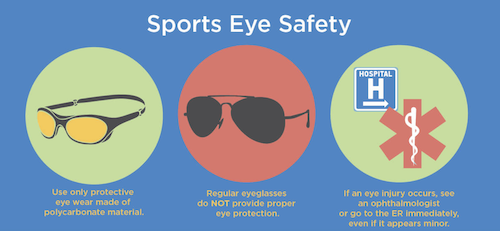
According to Prevent Blindness, there were more than 44,000 sports-related eye injuries treated in the United States in 2025. Basketball had the highest rate of eye injuries for those ages 15 and older, while pool and water sports had the most eye injuries for those ages 14 and younger. Eye injuries from pickleball are also on the rise as the sport becomes more popular.
The most common sports eye injuries are caused by blunt ocular trauma, leading to conditions like corneal abrasions (scratches on the eye’s surface), a black eye (bruising around the eye), and more serious injuries such as a retinal detachment or an orbital fracture (broken bone in the eye socket).
The good news is that the vast majority of these eye injuries can be prevented. Here are a few tips:
- Regular glasses, sunglasses and even occupational safety glasses don’t provide enough protection. Wear proper safety goggles (lensed polycarbonate protectors) for racquet sports or basketball.
- Make sure your eye guard or sports protective eyewear is labeled “ASTM F803 approved.” This means it has been performance tested by the American Society of Testing and Materials to ensure it provides the highest level of protection.
- Use batting helmets with polycarbonate face shields for baseball or softball.
- If you have an eye disease, have had eye surgery or suffered an eye injury, talk to your eye doctor about when you can safely return to your sport and any precautions you should take.
If you receive an eye injury, you should see an ophthalmologist as soon as possible to fully assess the damage to your eye and ensure prompt treatment. Click HERE to learn more about ocular trauma care provided at Texas Retina.