

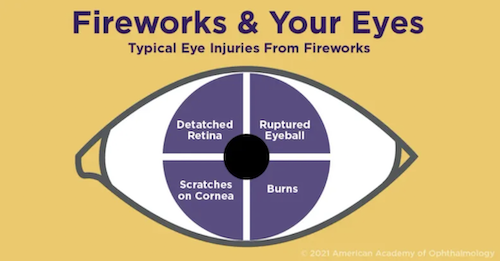
Summer is here, and for many that means outdoor celebrations that include fireworks, especially around the 4th of July. Unfortunately, this also means an increase in eye injuries.
Here are a few fast facts:
- Most fireworks injuries happen between mid-June and mid-July.
- According to the U.S. Consumer Product Safety Commission’s most recent annual fireworks injury report, fireworks caused 11 deaths, and 14,700 people were treated in the ER for fireworks injuries in 2024.
- The report found that 14-15% of fireworks injuries were eye injuries.
- Some of the most severe injuries to the eye from fireworks include rupture of the globe, chemical and thermal burns, corneal abrasions and retinal detachment. All of these can cause permanent eye damage and vision loss.
- Adults ages 25 to 44 accounted for the largest share of reported injuries (32%), followed by people ages 15 to 24 (24%).
- Even sparklers can be dangerous — they burn at 2,000 degrees and were responsible for 1,700 emergency department-treated injuries in 2024.
- Many fireworks injuries are caused by flaws in equipment and explosives. In 2023, approximately 18% of selected and tested fireworks products were found to contain noncompliant components, including fuse violations, the presence of prohibited chemicals and pyrotechnic materials overload.
- If you are not actually handling fireworks, you could still be in danger as approximately 65% of people injured by fireworks are bystanders.
How to Protect Your Eyes from Fireworks
The best way to protect your eyes is to leave fireworks to the professionals by attending a public display rather than attempting to set off fireworks at home or at a neighborhood gathering. Additional tips include the following:
- Respect safety barriers and follow all safety instructions.
- View fireworks from at least 500 feet away.
- Do not touch unexploded fireworks.
In addition, the American Academy of Ophthalmology recommends that all fireworks professionals and bystanders wear eye protection that meets criteria set by the American National Standards Institute (ANSI).
What to Do for a Fireworks Eye Injury
If you or someone you know experiences an eye injury caused by fireworks, treat the situation as an emergency and seek medical attention immediately.
- Do not rub your eyes.
- Do not rinse your eyes.
- Do not apply pressure.
- Do not remove any objects that are stuck in the eye.
- Do not apply ointments or take any blood-thinning pain medications such as aspirin or ibuprofen unless directed by a doctor.
At Texas Retina, we have unfortunately seen our share of eye injuries caused by fireworks and encourage you to take all the necessary precautions to keep you and your family safe this summer.