

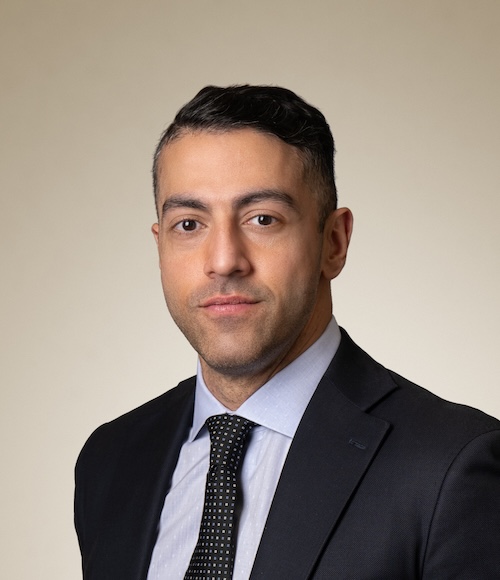
In the current issue of Ocular Surgery News on Healio, Texas Retina’s Ashkan M. Abbey, MD, shares his perspective on the recently reported two-year results from the Phase 3b/4 SALWEEN study evaluating VABYSMO® (faricimab-svoa) for the treatment of polypoidal choroidal vasculopathy (PCV).
An aggressive subtype of neovascular (wet) age-related macular degeneration (AMD), PCV is a retinal condition characterized by abnormal blood vessels and polyp-like lesions that develop beneath the retina. These abnormal vessels can leak fluid or bleed, potentially leading to vision loss. PCV is particularly prevalent among Asian populations.
Vabysmo is a bispecific antibody administered by intravitreal injection. It targets and inhibits two signaling pathways — angiopoietin-2 (Ang-2) and vascular endothelial growth factor-A (VEGF-A) — that are involved in the development and progression of several vision-threatening retinal conditions, including PCV.
Results of the SALWEEN Study
The SALWEEN study was a multicenter, open-label, single-arm, 108-week trial that evaluated treatment-naïve patients aged 50 years and older with symptomatic macular PCV. It enrolled 135 patients across China, Hong Kong SAR, India, Japan, Malaysia, Singapore, South Korea, Taiwan and Thailand.
Patients received four loading doses of VABYSMO (faricimab-svoa injection 6 mg) over 12 weeks, followed by additional treatments at 8-, 12-, or 16-week intervals. The primary endpoint was the change from baseline in best-corrected visual acuity (BCVA), averaged over weeks 40 through 48.
Key findings included:
- 62% of patients achieved complete regression of polypoidal lesions.
- 86% achieved lesion inactivation.
- More than 60% of patients reached 20-week treatment intervals at two years while maintaining meaningful visual and anatomic improvements.
“The most compelling finding of the SALWEEN study is that faricimab monotherapy produced a very high degree of control of the underlying polypoidal lesions and maintained that control despite exceptionally long treatment intervals,” said Dr. Abbey. “I’m grateful for the opportunity to weigh in on this important and evolving area of retinal disease management.”
Read the full article and Dr. Abbey’s commentary.
About Dr. Abbey
Dr. Abbey serves as Texas Retina’s Director of Clinical Research for Dallas and cares for patients in the Dallas Main and Rockwall offices.